

Our Big Event
12 March 2026
Our Big Event
12 March 2026
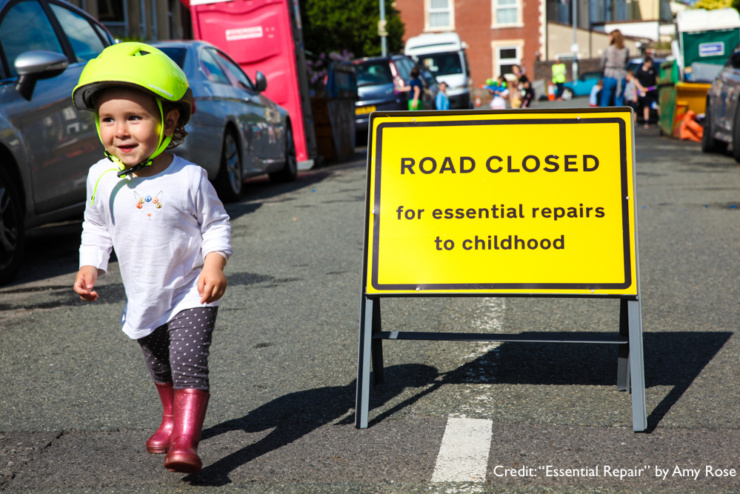
Children are rarely considered, let alone prioritised, in decision-making around streets, transport policy and planning. However, they are arguably the group most impacted by these decisions, now and in the future. An adult-centric, car-centric approach to designing our streets and neighbourhoods has, over decades, had the unintended effect of damaging children’s health, taking children’s lives, and limiting children’s freedom to play outside and get around independently. Those facing inequalities have been impacted the most.
By contrast, a child-centred approach to transport policy and planning could both transform children’s lives and transform our streets and neighbourhoods into healthy, pleasant, safe, and equitable places for everyone. Streets for Play, Streets for Freedom: How a child lens would transform transport policy, written by Alice Ferguson and Tim Gill, makes this case.
The paper also raises the hard fact of child road death. Worldwide, 75,000 child pedestrians and cyclists (0-19) are killed by motorists each year. Road traffic injuries are the leading cause of death for children and adolescents, exceeding deaths from cancer, drowning or malaria.
In the UK, child pedestrian fatalities have fallen since the 1980s, but this is alongside a dramatic decline in children’s outdoor freedom: we have not made streets safer, just removed children from the danger, at huge cost to their wellbeing. And, even in this context, 329 children lost their lives as pedestrians or cyclists over the decade from 2015-2024. These ongoing devastating tragedies are both unacceptable and avoidable – and are more than enough reason to prioritise children.
No-one planned for huge numbers of children to be killed by cars. No-one set out to create places that lead children to live isolated, indoor, sedentary lives. Equally, no-one disputes that children’s lives are precious. Nor that playing outdoors, socialising with friends, and getting around on foot, on wheels and by bike are part and parcel of a healthy and happy childhood.
Despite this, streets and neighbourhoods continue to favour cars and drivers over children. This needs to be reversed.
Children’s everyday freedoms overlap with many different policy/interest areas: active travel, road safety, public health, physical activity, children’s rights, climate, clean air, equalities, child development, planning, housing, urban design, play, parenting, community activism…
We now need to join the dots and build a powerful, collective focus on children and streets. A “child lens” has the power to transform children’s lives, shift the status quo and create the streets we all need for the future.


Windmill Hill City Farm
Philip Street
Bristol
BS3 4EA
Share this page:


Follow us:


