

Our Big Event
12 March 2026
Our Big Event
12 March 2026

Much of the focus around children’s wellbeing these days is on screens and technology – and of course, this is a huge issue. But, whilst the grip of big-tech has certainly exacerbated and capitalised on the problem, it is not the main reason children stopped playing out in the first place. We started the Playing Out movement in 2008/9, long before anyone imagined children having smartphones – and it was very clear that the main barrier to children’s outdoor freedom was the environment itself.
Traffic in the UK has more than doubled since the 1980s. Cars are rapidly becoming larger and more threatening to children. The vast majority of new housing has been designed around cars, without considering children’s needs.
‘No Ball Games’ culture dominates housing estates, making children feel unwelcome on their own doorstep. Overall, the space available for children to play near home is both diminishing and becoming less safe.
On top of all this, open spaces where children play are increasingly sold off or privatised.
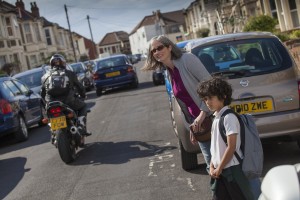
Linked to this, there has been a big shift in attitudes about children playing out. Parents are more fearful, especially about traffic danger, which is very real. They are also afraid of being judged or doing the wrong thing. Other adults and authorities are no longer supporting children to be out safely as they once did.
The diagram above shows how these factors work together to make it more and more difficult to play out, contributing to some serious problems for children’s health and wellbeing.
The aim of play streets and the whole Playing Out movement is to break this vicious circle and restore playing out as a normal part of children’s lives. We can all take action to change this – whether parents, residents, communities, drivers, government, councils or housing providers.


Windmill Hill City Farm
Philip Street
Bristol
BS3 4EA
Share this page:


Follow us:


